Winter Road Trips
Driving in Finland in Winter: 7 Mistakes Tourists Should Avoid
Most winter driving problems in Finland are predictable. Here are the 7 mistakes foreign visitors make most often — and how to avoid each one.
9 min readRoadTripFinland
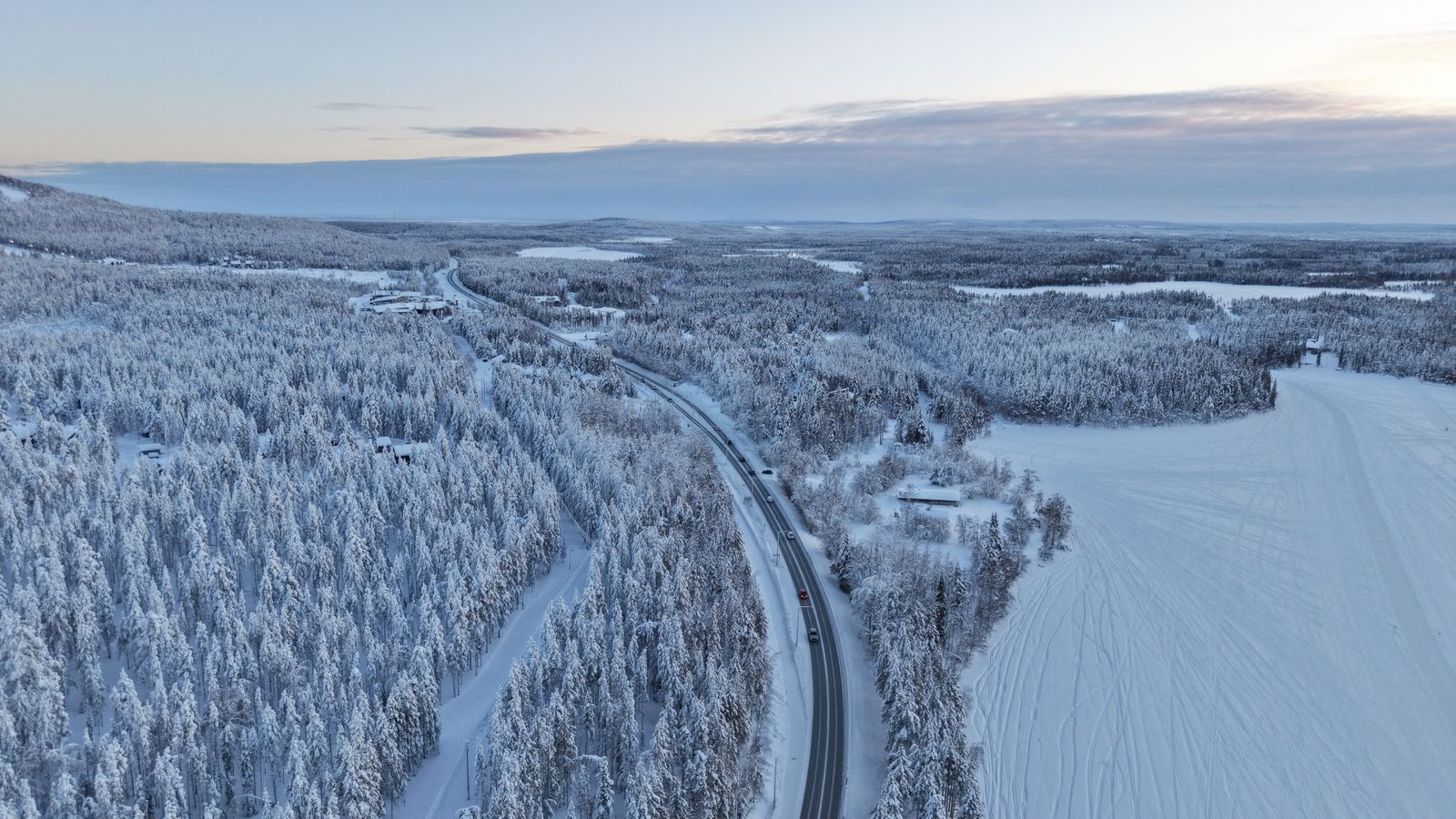
Most winter driving problems in Finland are predictable. The roads are generally well maintained, rental cars come with proper winter tyres and the country has decades of experience managing winter conditions. What catches visitors out is usually not the road itself — it is a handful of specific mistakes that are easy to avoid once you know what they are.
Here are the seven that matter most.
Mistake 1: Driving Too Fast for Conditions
Posted speed limits in Finland are maximums for good conditions. They are not targets for every situation.
On a snowy or icy road, the safe speed can be significantly lower than the posted limit. On a motorway showing 120 km/h, the right speed in a snowstorm might be 60 or 70 km/h. On a rural road showing 80 km/h, a section of black ice might call for 30.
The problem is that the road can look manageable when it is not. A surface that appears merely wet or dark can be black ice — a thin, nearly invisible layer of ice that reduces grip dramatically. Temperatures just below 0°C are often more dangerous than deep cold, because the ice is wetter and more slippery.
What to do: Reduce speed significantly on any surface that looks icy, compacted or wet in cold temperatures. Treat the posted limit as a ceiling, not a guide.
Mistake 2: Braking or Steering Too Suddenly on Slippery Surfaces
Sudden inputs — hard braking, sharp steering, aggressive acceleration — are what cause a car to lose control on ice or compacted snow. The car can feel stable right up until the moment it does not.
This is the mistake that surprises drivers who are used to modern cars with ABS and stability control. Those systems help, but they do not override physics. On a genuinely slippery surface, smooth and gradual is always safer than sudden and sharp.
What to do: Brake gently and early. Steer smoothly. Accelerate gradually. If the car starts to slide, ease off the inputs rather than overcorrecting. Avoid cruise control on slippery roads — it can apply power at the wrong moment.
Mistake 3: Underestimating Stopping Distances
Stopping distances on ice are dramatically longer than on dry tarmac, even with good winter tyres. This is the detail that catches visitors out most reliably.
At 80 km/h on dry tarmac, a typical stopping distance is around 50–60 metres. On ice, the same car at the same speed may need several times that distance. The exact figure depends on the car, tyres, temperature and surface — but the principle is consistent: it takes much longer to stop than it feels like it should.
Following too closely is one of the most common causes of winter accidents in Finland. Traficom (the Finnish Transport and Communications Agency) consistently identifies excessive speed and insufficient following distance as key factors in winter road accidents.
What to do: Increase following distance far beyond what feels normal. On a slippery road, leave at least four to five seconds of gap to the vehicle ahead. On ice, more. Brake early and gently for junctions, bends and any hazard you can see ahead.
Mistake 4: Leaving Without Checking Weather and Road Conditions
A road that was fine in the morning can be significantly worse by afternoon. A storm that was not forecast can arrive quickly. Driving into deteriorating conditions on an unfamiliar road is a preventable risk.
What to do: Check conditions before every long drive, not just at the start of the trip.
Official Finnish sources:
- Fintraffic road conditions: liikennetilanne.fintraffic.fi — current road condition and maintenance status across Finland
- Finnish Meteorological Institute: fmi.fi — weather forecasts and warnings
- Traficom road safety: traficom.fi — general road safety guidance for Finland
If the forecast shows a significant storm or the road condition service shows untreated or very slippery roads on your route, consider delaying. A day spent at your current location is not a failed trip.
Mistake 5: Assuming Winter Tyres Remove Slippery-Road Risk
Winter tyres are mandatory in Finland during winter conditions, and they make a real difference. They improve grip when pulling away, cornering and driving on snow. They are a significant safety improvement over summer tyres.
They do not make braking on ice safe at normal speeds.
This is the misunderstanding that leads to overconfidence. A driver who knows the car has winter tyres may feel safe driving at the same speed they would in summer. The tyres help — but stopping distances on ice are still dramatically longer than on dry tarmac, and winter tyres do not change that fundamental fact.
AWD has the same limitation. It helps with traction when pulling away or climbing, but it does not improve braking on ice. A car with AWD and winter tyres still needs the same stopping distance as a FWD car with the same tyres.
What to do: Treat winter tyres as a tool that helps, not a guarantee of safety. Adjust speed and following distance regardless of what the car is equipped with.
Verify current Finnish tyre requirements with official sources before travel. Legal requirements can change.
Mistake 6: Choosing the Wrong Rental Car for the Actual Trip
A small city car with winter tyres can handle maintained Finnish main roads. It is a different proposition on a steep, snowy cabin access road or a rural track that has not been cleared recently.
In my own experience, FWD has been sufficient for the overwhelming majority of winter driving in Finland — main roads, towns, most rural routes. AWD becomes especially useful for the final kilometres to a cabin, on hills, in deeper snow and on icy ruts. That is a personal observation, not a statistic.
I have also seen a light, low FWD car — a Mini Cooper — get stuck in a snowy parking area. Not a dramatic snowstorm. Just a combination of low clearance, soft snow and a slight slope. The car was fine on the main road. The parking area was the problem.
The mismatch between car and specific road is what catches people out. Think about the last kilometre, not just the main route.
What to do: Ask the rental company about vehicle suitability for your specific accommodation. If your cabin is on a steep or narrow access road, a higher-riding car with AWD gives more margin. For a full breakdown, see what type of rental car you need in Finland and whether you need a 4x4 in Finnish Lapland.
Compare rental cars in Finland on DiscoverCars — check winter-equipment terms and vehicle type before booking.
Ad link: DiscoverCars. We may earn a commission at no extra cost to you. Opens in a new tab. Read more.
Mistake 7: Driving When the Sensible Decision Is to Wait
This is the mistake that underlies several of the others. The pressure to stay on schedule — to reach the cabin tonight, to make the connection tomorrow — leads drivers to push on when conditions are telling them to stop.
Winter driving in Finland rewards patience. The roads are well maintained, but weather still changes the driving task. A driver who is willing to stop, reassess and wait for better conditions is a safer driver than one who pushes through.
What to do: Build flexibility into the schedule. If conditions deteriorate, stop somewhere safe and reassess. If a storm is forecast for your driving day, consider delaying. If you are tired, stop — not at the next town, but now.
Signs that waiting is the better choice:
- Storm warning or heavy snowfall forecast on your route
- Road condition service showing untreated or very slippery roads
- Visibility dropping significantly
- You are already tired from the previous day
- The schedule requires driving faster than conditions allow
What to Keep in the Car
- Ice scraper and snow brush
- Small folding shovel
- Warm blanket or sleeping bag
- Gloves, hat and warm jacket accessible (not buried in luggage)
- Torch
- Water and snacks
- Charged phone with emergency number 112 saved
- Accommodation address and contact number accessible without internet
If the car fails in severe cold and the heater stops working, waiting for roadside assistance can become genuinely unpleasant. Warm clothing in the car is not optional.
Before You Leave
- Confirm your licence and rental requirements are in order
- Learn the vehicle controls before leaving the pickup area
- Check weather and road conditions for the full route
- Clear snow and ice from all windows, lights and the roof before moving
- Keep documents accessible
FAQ
Are Finnish roads safe in winter? They are generally well maintained, but weather still changes the driving task. Your speed and decisions matter most.
What should inexperienced winter drivers do? Keep driving to daylight and familiar main roads. If a major storm is forecast, delay rather than push through. Consider a car-free resort stay if you are not comfortable with winter driving.
Can I park anywhere to see the Northern Lights? No. Use safe, legal parking and never stop on an unlit road shoulder. See Northern Lights viewing advice.
Does AWD make winter driving safe? AWD helps with traction when pulling away or climbing, but it does not improve braking on ice. Stopping distances on ice are the same regardless of drivetrain.
Related reading: Winter Road Trip in Finland: What Can Go Wrong · What type of rental car do you need in Finland? · Do you need a 4x4 in Finnish Lapland? · Helsinki to Lapland winter road trip · Finland winter packing list
Topics
Continue planning